
WORLD
Farmers enter Paris on tractors in protest at trade deal

French farmers rolled into Paris on tractors Thursday in a show of dissent against an EU trade deal with South American bloc Mercosur they fear will create unfair competition, as the government warned against “illegal” protest actions.
Dozens of tractors arrived before dawn and cruised through Paris, with some reaching the Eiffel Tower and others at the Arc de Triomphe, in a protest organised by the Rural Confederation union.
“We said we’d come up to Paris — here we are,” said Ludovic Ducloux, co-head of one of the union’s chapters.
One of them bore the message “No To Mercosur”, referring to the deal with four South American nations.
The deal would create the world’s biggest free-trade area and help the 27-nation EU to export more vehicles, machinery, wines and spirits to Latin America.
But farmers fear being undercut by a flow of cheaper goods from agricultural giant Brazil and its neighbours.
Rural Confederation president Bertrand Venteau told AFP that the farmers intended to peacefully demonstrate at symbolic Parisian sites, even if it meant they ended up in police custody.
A government spokeswoman on Thursday however warned against such “illegal” actions, saying French authorities would “not stand by”.
Blocking a motorway or “attempting to gather in front of the National Assembly with all the symbolism that this entails is once again illegal”, Maud Bregeon told France Info Radio.
In another protest near the southwestern city of Bordeaux, about 40 farm vehicles blocked access to a fuel depot, according to the local authorities.
As well as the trade deal, the farmers are also upset over a government decision to cull cows in response to the spread of nodular dermatitis, a bovine sickness widely known as lumpy skin disease.
At the end of last month, President Emmanuel Macron met farmers to discuss the trade pact and the cull.
During earlier protests, farmers blocked roads, sprayed manure and dumped garbage in front of government offices to force the authorities to review their policy.
Belgian farmers have also staged mass protests against the trade deal, rolling some 1,000 tractors into Brussels in December.
Modi government faces fresh criticism after alleged attempt to demolish mosque
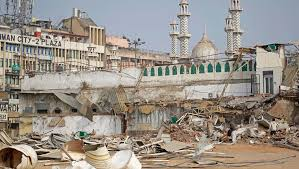
An alleged attempt to demolish a mosque in New Delhi led to protests, police action, and arrests, sparking renewed criticism of the Modi government over minority rights
The Indian government led by Prime Minister Narendra Modi has once again come under fire after an alleged attempt to demolish a mosque in the capital, triggering protests and clashes with police.
According to reports, local Muslims resisted what they described as a planned move to demolish the Faiz Elahi Mosque. Their resistance reportedly foiled the attempt, but tensions quickly escalated at the site.
Indian media reported that Delhi Police used tear gas to disperse protesting Muslims who stood their ground to protect the mosque. During the confrontation, at least five Muslim protesters were arrested for resisting the police action.
The incident has reignited debate over the treatment of religious minorities in India. Critics say such actions expose the real face of the current government and raise serious questions about religious freedom and equal rights.
Observers believe the situation is adding fuel to the fire at a time when communal harmony is already under strain. Rights groups have repeatedly warned that targeting places of worship could deepen divisions and push tensions to the boiling point.
Authorities, however, have not yet issued a detailed official statement clarifying the circumstances surrounding the incident.
Venezuela–US Oil Import Deal Finalised, Global Oil Prices Decline

A deal has been finalised between Venezuela and the United States for the import of Venezuelan oil, leading to a decline in global oil prices.
US President Donald Trump announced on social media that Venezuela’s interim government will supply between 30 million and 50 million barrels of oil to the United States. He said the oil would be sold on the open market, while the revenue generated would remain under US control and be utilised for the welfare of both the American and Venezuelan people.
President Trump directed the US Secretary of Energy to ensure the immediate implementation of the plan and announced that oil tankers would soon be dispatched to Venezuela to facilitate the transfer.
Following the agreement, international oil markets reacted negatively. Brent crude prices fell by 1.7 per cent to $60.70 per barrel, while West Texas Intermediate (WTI) crude declined by 2 per cent to $57.13 per barrel.
Earlier, President Trump stressed the need to accelerate weapons manufacturing in the United States, noting that the production of ships and helicopters takes several years. He cited India’s order for 68 Apache helicopters, stating that India had to wait five years for delivery.
Trump reiterated that the US military remains the most powerful force in the world and that no other military can match its strength.
He also claimed that the Venezuelan people are relieved following the departure of President Nicolás Maduro, describing Maduro as a cruel leader and alleging his involvement in the deaths of millions.
The developments have sparked debate in global energy and political circles, particularly regarding their potential impact on oil markets and US–Venezuela relations.
Trump Announces Plan to Transfer Venezuelan Oil to US
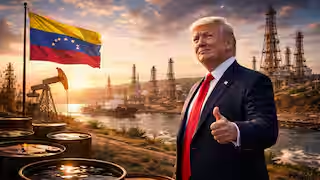
Former US President Donald Trump has announced that between 30 million and 50 million barrels of high-quality oil from Venezuela will be transferred to the United States.
In a message posted on social media, Trump said the oil would be sold in the US at prevailing market prices.
He added that the revenue generated from the sales would be under his direct control and would be used for the benefit of both the American and Venezuelan people.
Trump also directed US Energy Secretary Chris Wright to begin work on the plan immediately and ensure that the oil is delivered to US ports.
The announcement has drawn significant attention, as it involves energy cooperation with Venezuela amid ongoing political and economic sensitivities surrounding the country’s oil sector.
US Military Aircraft Movements Signal Heightened Tensions in Middle East.
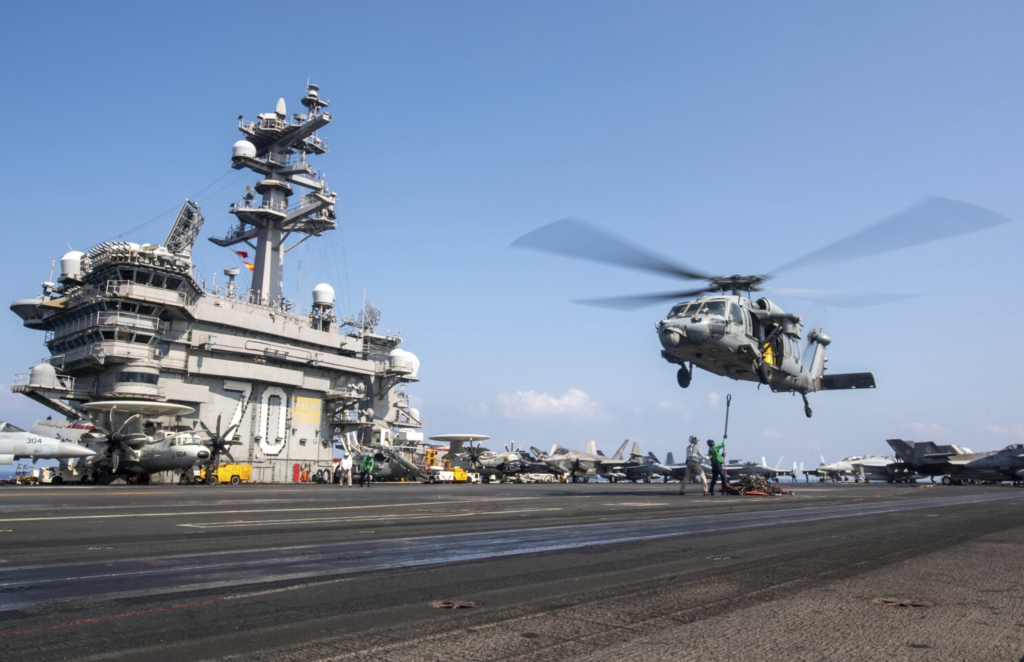
Over the past several hours, dozens of US Air Force aerial refuelling tankers and heavy military transport aircraft have departed from the United States and from a US airbase in the United Kingdom, heading toward the Middle East, according to multiple sources.
The aircraft involved include C-5 Galaxy and C-17 Globemaster transport planes, commonly used for the rapid deployment of troops, equipment, and logistical support. The large-scale movement suggests a significant transfer of US military assets to the region.
Sources indicate that the deployments come amid growing speculation that Washington may be preparing for potential military action against Iran. While no official statement has been issued by US authorities confirming imminent strikes, the scale and nature of the air movements point to increased operational readiness.
The developments have further heightened regional tensions and are being closely monitored by international observers, given their potential implications for Middle Eastern security and global stability.
Rising Concerns Over Potential Military Action Against Iran, Says Iranian Official
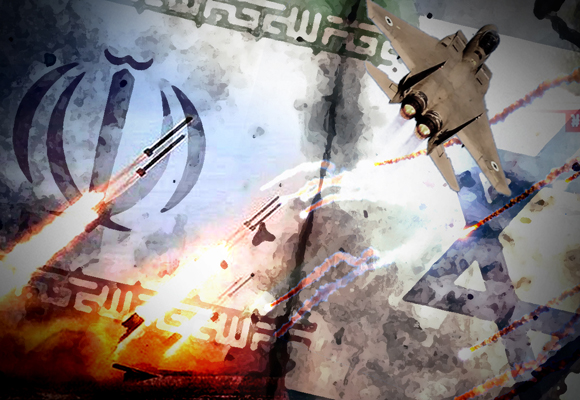
January 6, 2026 — An Iranian official has expressed growing concerns that former U.S. President Donald Trump or Israel could take military action against Iran. This statement comes amid increasing geopolitical tensions in the region, as reported by Reuters.
The official’s remarks reflect a rising sense of uncertainty about the future, as both Trump and Israel have previously shown strong stances against Iran. The fears of potential military escalation have been escalating in recent months, sparking discussions within global diplomatic circles.
While the situation remains fluid, analysts are closely monitoring developments as tensions continue to rise.
Trump: second strike in Venezuela possible if government does not cooperate
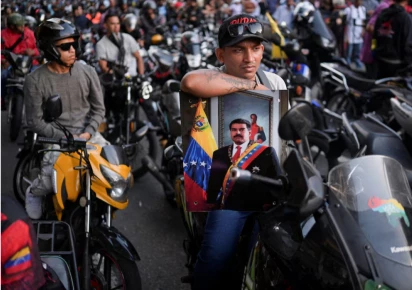
Top officials call Maduro’s capture criminal; Trump says Cuba ‘ready to fall’ without US intervention
US President Donald Trump said on Sunday that the US might launch a second military strike on Venezuela following the capture of President Nicolas Maduro if remaining members of the administration do not cooperate with his efforts to get the country “fixed.”
Trump’s comments to reporters aboard Air Force One raised the possibility of further US military interventions in Latin America and suggested Colombia and Mexico could also face military action if they do not reduce the flow of illicit drugs to the US.
“Operation Colombia sounds good to me,” Trump said. He also said that Cuba, a close ally of Venezuela, “looks like it’s ready to fall” on its own without US military action.
Maduro is in a New York detention centre awaiting a Monday court appearance on drug charges. His capture by the United States has sparked deep uncertainty about what is next for the “oil-rich” South American nation.
Trump said his administration will work with remaining members of the Maduro regime to clamp down on drug trafficking and overhaul its oil industry, rather than push for immediate elections to install a new government.
Top officials in Maduro’s government are still in charge and have called the detentions of Maduro and his wife, Cilia Flores, a kidnapping.
“Here, there is only one president, whose name is Nicolas Maduro Moros. Let no one fall for the enemy’s provocations,” Interior Minister Diosdado Cabello said in an audio recording released by the ruling PSUV socialist party.
Images of the 63-year-old Maduro, blindfolded and handcuffed, stunned Venezuelans. The operation was Washington’s most controversial intervention in Latin America since the invasion of Panama 37 years ago.
Defence Minister General Vladimir Padrino said on state television the US attack killed soldiers, civilians and a “large part” of Maduro’s security detail “in cold blood.” Venezuela’s armed forces have been activated to guarantee sovereignty, he said.
The Cuban government said 32 of its citizens were killed during the raid.
Vice President Delcy Rodriguez — who also serves as oil minister — has taken over as interim leader with the blessing of Venezuela’s top court and has said Maduro remains president.
Rodriguez has long been considered the most pragmatic member of Maduro’s inner circle. But she has publicly contradicted Trump’s claim that she is willing to work with the United States.
Trump said Rodriguez may pay a higher price than Maduro “if she doesn’t do what’s right,” according to an interview with The Atlantic magazine on Sunday.
The Venezuelan communications ministry did not immediately respond to a request for comment on that remark.
“A quarantine on their oil’
Trump’s administration has described Maduro’s capture as a law-enforcement mission to force him to face US criminal charges filed in 2020, including narco-terrorism conspiracy. Maduro has denied criminal involvement.
But Trump also said US oil companies need “total access” to the country’s vast reserves and suggested that an influx of Venezuelan emigrants to the United States also factored into the decision to capture Maduro.
“What really played (into the decision to capture Maduro) is the fact that he sent millions of people into our country from prisons and from mental institutions, drug dealers, every drug addict in his country was sent into our country,” Trump said.
The Venezuelan government has said for months that Trump was seeking to take the country’s natural resources, especially its oil, and officials made much of a previous Trump comment that major US oil companies would move in.
“We are outraged because in the end everything was revealed — it was revealed that they only want our oil,” Cabello said.
Once one of the most prosperous nations in Latin America, Venezuela’s economy tanked in the 2000s under President Hugo Chavez and nosedived further under Maduro, sending about one in five Venezuelans abroad in one of the world’s biggest exoduses.
US Secretary of State Marco Rubio said Venezuela’s next leader should keep Venezuela’s oil industry out of the hands of US adversaries and stop drug trafficking, and cited an ongoing US blockade on tankers.
“That means their economy will not be able to move forward until the conditions that are in the national interest of the United States and the interest of the Venezuelan people are met,” he said on ABC’s “This Week.”
Muted streets
Some Maduro supporters gathered at a protest march on Sunday afternoon in Caracas.
Once ruled by Spain, Venezuela’s “people must not surrender, nor should we ever become a colony of anyone again,” said demonstrator Reinaldo Mijares. “This country is not a country of the defeated.”
Maduro opponents in Venezuela have been wary of celebrating his seizure, and the presence of security forces seemed, if anything, lighter than usual on Sunday.
Despite a nervous mood, some bakeries and coffee shops were open and joggers and cyclists were out as usual. Some citizens were stocking up on essentials.
“Yesterday I was very afraid to go out, but today I had to. This situation caught me without food and I need to figure things out. After all, Venezuelans are used to enduring fear,” said a single mother in oil city Maracaibo who bought rice, vegetables and tuna.
To the disappointment of Venezuela’s opposition, Trump has given short shrift to the idea of 58-year-old opposition leader and Nobel Peace Prize winner Maria Corina Machado taking over, saying she lacked support.
Machado was banned from standing in the 2024 election but has said her ally Edmundo Gonzalez, 76, who the opposition and some international observers say overwhelmingly won that vote, has a democratic mandate to take the presidency.
Looming questions
US Senate Democratic leader Chuck Schumer said the White House has failed to say how long the US intends to be in Venezuela and how many American troops might be required.
“The American people are worried that this is creating an endless war — the very thing that Donald Trump campaigned against,” Schumer said on ABC’s “This Week.” He said lawmakers would weigh a measure to constrain further Trump administration action in Venezuela, though its prospects could be uncertain given that Congress is controlled by Trump’s Republicans.
While many Western nations oppose Maduro, there were many calls for the US to respect international law, and questions arose over the legality of seizing a foreign head of state.
The UN Security Council planned to meet on Monday to discuss the attack. Russia and China, both major backers of Venezuela, have criticised the US.
UAE’s space ambitions take off in a stellar 2025
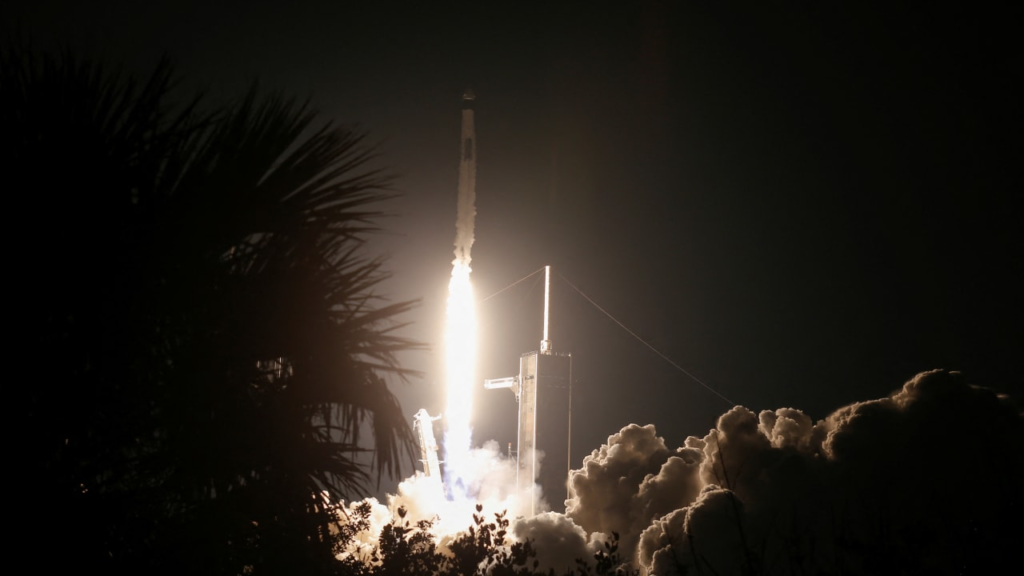
The United Arab Emirates strengthened its standing as a global center for advanced technology and space science in 2025, marked a year of major achievements that highlighted its transition toward a knowledge-based, innovation-driven economy.
Over the course of the year, the UAE significantly expanded its orbital infrastructure and deepened international partnerships, accelerating progress in lunar exploration and Earth observation.
Several strategic satellites were deployed, including Thuraya-4, MBZ-SAT, Al Ain Sat-1, HCT-SAT1 and the Foresight Constellation, APP reported.
The launch of Etihad-SAT delivered the country’s first domestically developed radar satellite capability, while the PHI-1 mission represented the first modular satellite platform created under the Payload Hosting Initiative in collaboration with the UN Office for Outer Space Affairs.
A key milestone came in February when the Mohammed Bin Rashid Space Centre (MBRSC) signed a partnership with Thales Alenia Space to develop the Crew and Science Airlock for NASA’s Lunar Gateway.
The 15-year agreement secures a permanent UAE presence aboard the lunar station and positions the country to send its first astronaut to the moon.
Further advancing its lunar ambitions, MBRSC also signed an agreement with Firefly Aerospace to supply the lander for the Rashid 2 Rover mission to the far side of the moon. Cooperation with France’s National Centre for Space Studies was expanded to equip the rover with CASPEX cameras and advanced systems.
Rashid 2 has successfully completed environmental and mechanical testing inside the UAE and has been cleared for shipment to the United States ahead of its planned 2026 launch.
In another landmark achievement, Space42 oversaw the integration and testing of three Synthetic Aperture Radar satellites—Foresight-3, Foresight-4 and Foresight-5—within the UAE for the first time.
The satellites will deliver imagery with up to 25-centimetre resolution to support disaster response, climate monitoring and urban planning.
Regional collaboration also gained momentum in December with the launch of the “813” Arab Satellite, a UAE-led initiative aimed at harnessing space-based data to advance sustainable development across the Arab world.
To support long-term growth of the sector, the UAE rolled out advanced satellite engineering programmes through the National Space Academy in partnership with EDGE Group.
Meanwhile, the UAE Space Agency completed the Critical Design Review for the Emirates Mission to the Asteroid Belt, a seven-year endeavour to explore the main asteroid belt between Mars and Jupiter.
Together with the continued scientific output of the Hope Probe’s Mars atmospheric mission, these developments highlight the UAE’s emergence as a leading contributor to global space exploration and advanced technological innovation.
Winter storm bears down on US Northeast, disrupting airline travel
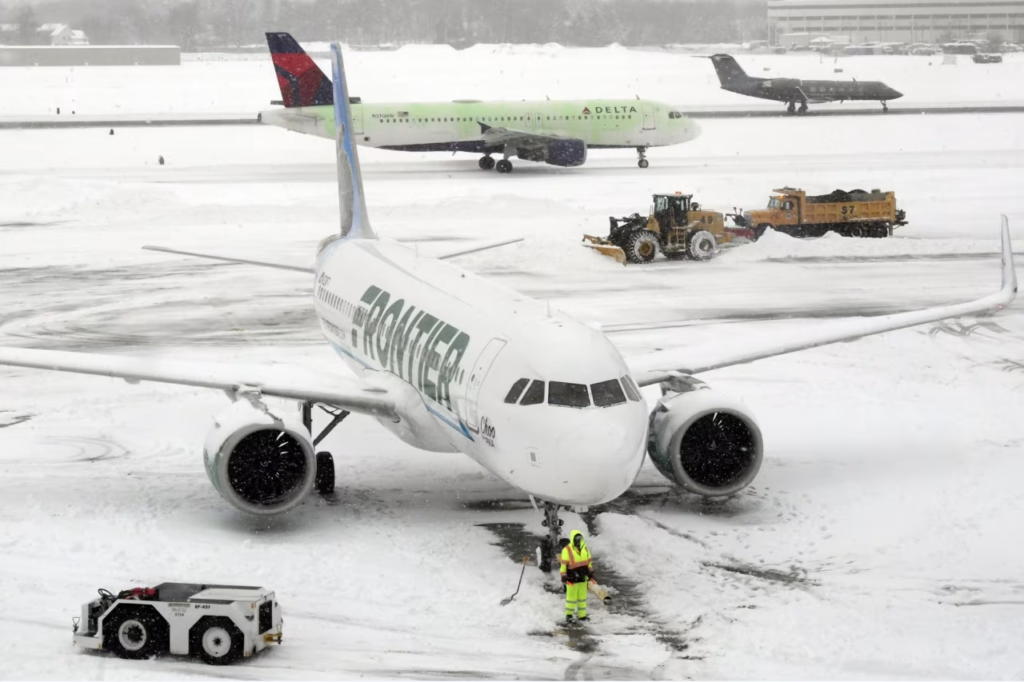
A winter storm packing a frosty mix of snow and ice bore down on the US Northeast early on Saturday, disrupting post-holiday weekend airline traffic and prompting officials in New York and New Jersey to issue weather emergency declarations.
The National Weather Service posted ice storm and winter storm warnings throughout New York state and Connecticut, forecasting some of the heaviest snowfall totals – up to a foot in localized areas – for Long Island and the Hudson Valley.
New York City could see its highest accumulations since 2022, with peak snowfall rates of 2 or more inches per hour, according to an emergency declaration on Friday from Governor Kathy Hochul, warning of treacherous road conditions.
In many areas snow was forecast to be mixed or glazed over with sleet and freezing rain.
“The safety of New Yorkers is my top priority, and I continue to urge extreme caution throughout the duration of this storm,” Hochul said in a statement, admonishing residents to “avoid unnecessary travel.”
Ice storm warnings and winter weather advisories were likewise posted for most of Pennsylvania, much of Massachusetts, and most of New Jersey, where a state of emergency also was declared. High winds were forecast as part of the storm.
Snow began falling in western New York state and the New York City area on Friday evening and was expected to intensify on Saturday.
More than 1,600 commercial airline flights within the United States and into or out of the country were canceled on Friday, and 7,800-plus were delayed as weather conditions began to worsen, according to the flight-tracking service FlightAware.
The three major airports serving the New York City area – John F. Kennedy, Newark Liberty International and LaGuardia Airport – accounted for the bulk of Friday’s flight cancellations. All three issued alerts on social media platform X warning travelers of potential disruptions.
Another 650 flights that had been scheduled to depart or land in the US on Saturday were canceled, FlightAware reported.
Representatives from American Airlines, United Airlines and JetBlue Airways told Reuters those carriers had waived change fees normally charged to re-book for passengers whose travel plans may be affected by weather-related disruptions.
New Jersey and Pennsylvania issued commercial vehicle restrictions for some roads, including many interstate highways.
“This storm will cause dangerous road conditions and impact holiday travel,” New Jersey’s acting governor Tahesha Way said in a statement. “We are urging travelers to avoid travel during the storm and allow crews to tend to roads.”
Zelenskiy says Russia using Belarus territory to circumvent Ukrainian defences
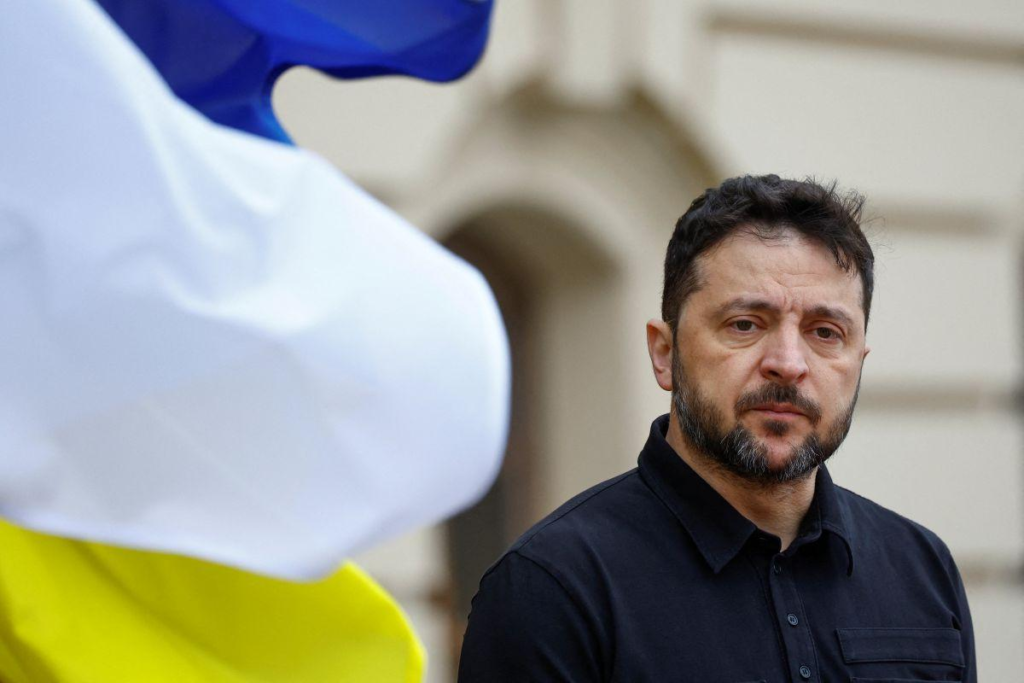
The Kremlin used Belarusian territory to launch its February 2022 invasion of Ukraine and Belarus
President Volodymyr Zelenskiy said that Russia was using ordinary apartment blocks on the territory of its ally Belarus to attack Ukrainian targets and circumvent Kyiv’s defences.
The Kremlin used Belarusian territory to launch its February 2022 invasion of Ukraine and Belarus remains a steadfast ally, though longstanding President Alexander Lukashenko has vowed to commit no troops to the conflict.
“We note that the Russians are trying to bypass our defensive interceptor positions through the territory of neighbouring Belarus. This is risky for Belarus,” Zelenskiy wrote on Telegram after a military staff meeting.
“It is unfortunate that Belarus is surrendering its sovereignty in favour of Russia’s aggressive ambitions.”
Zelenskiy said Ukrainian intelligence had observed that Belarus was deploying equipment to carry out its attacks in Belarusian settlements near the border, including on residential buildings.
“Antennae and other equipment are located on the roofs of ordinary five-storey apartment buildings, which help guide ‘Shaheds’ (Russian drones) to targets in our western regions.
This is an absolute disregard for human lives, and it is important that Minsk stops playing with this.”
The Russian and Belarusian defence ministries did not immediately respond to requests for comment.
Zelenskiy said the staff meeting also discussed ways of financing interceptor drones, which officials in Kyiv see as the best economically viable means of tackling Russian drone attacks, which have grown in intensity in recent months.
The president said the Ukrainian military’s general staff had been charged with working out changes to strategy in fending off air attacks “to defend infrastructure and frontline positions.”
Lukashenko this month said Russia’s Oreshnik ballistic missile system, described by Kremlin leader Vladimir Putin as impossible to intercept, had been deployed to Belarus and entered active combat duty.
An assessment by two US researchers said Moscow was likely stationing the nuclear-capable hypersonic Oreshnik at a former air base in eastern Belarus, a development that could bolster Russia’s ability to deliver missiles across Europe.
European shares muted as consumer, energy stocks limit healthcare gains

The pan-European STOXX 600 was up 0.2% at 587.91
European shares were muted on Tuesday as healthcare sector gains powered by heavyweight Novo Nordisk clinching US approval of its weight loss pill were offset by losses in consumer-facing shares.
The pan-European STOXX 600 was up 0.2% at 587.91 by 0808 GMT.
Major regional markets were largely subdued, with benchmark indexes in London and France little changed.
Shares of Novo Nordisk advanced 5.8% after the US Food and Drug Administration approved its weight-loss pill on Monday, giving the drugmaker a major competitive advantage in the increasingly lucrative weight management market.
The healthcare sector jumped 0.8%, the most among peers. Consumer discretionary shares were the biggest weights, with some luxury stocks such as Richemont falling.
Energy slipped 0.1%, after logging four consecutive sessions of gains.
Third-quarter US GDP figures, which are expected to show that the US economy had continued to grow strongly, will be on the radar in an otherwise data-light week.
EU’s von der Leyen: Will not leave EU summit without agreement on Ukraine financing
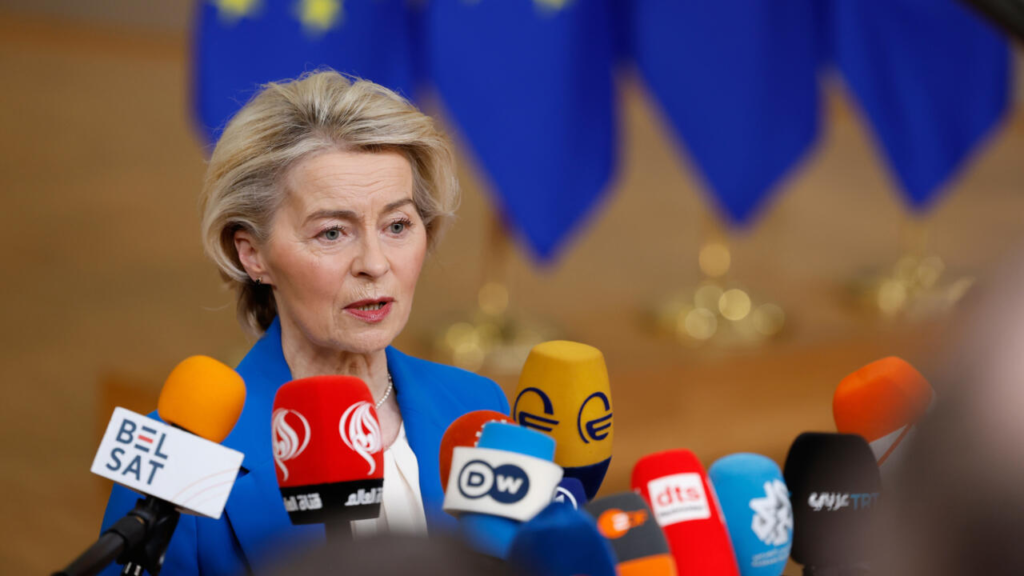
“I will not leave council without a solution for Ukraine financing,” she told reporters ahead of the council
European Commission President Ursula von der Leyen said on Thursday she expected EU member states will reach an agreement on financing Ukraine at the summit held in Brussels Thursday and Friday.
“I will not leave council without a solution for Ukraine financing,” she told reporters ahead of the council.
Countries such as Belgium have opposed using frozen Russian assets to finance Ukraine unless the other member countries accept to share the financial risk of such a move.
“I totally support Belgium,” she said.