

Spectrum auction could finally fix Pakistan’s internet woes, says Jazz chief
Six spectrum bands with a combined capacity of 600 megahertz will be auctioned
Pakistan’s upcoming spectrum auction is a “once-in-a-decade opportunity” to transform internet quality for the public, said Aamir Ibrahim, chief executive officer (CEO) of Jazz, Pakistan’s leading digital operator and VEON’s leading operating company.
His comments follow last week’s announcement by the Pakistan Telecommunication Authority (PTA) that the long-awaited spectrum auction is set to be held in late February.
Under a plan approved by Prime Minister Shehbaz Sharif, six spectrum bands with a combined capacity of 600 megahertz will be auctioned—an expansion expected to significantly strengthen data capacity and support next-generation services across the country.
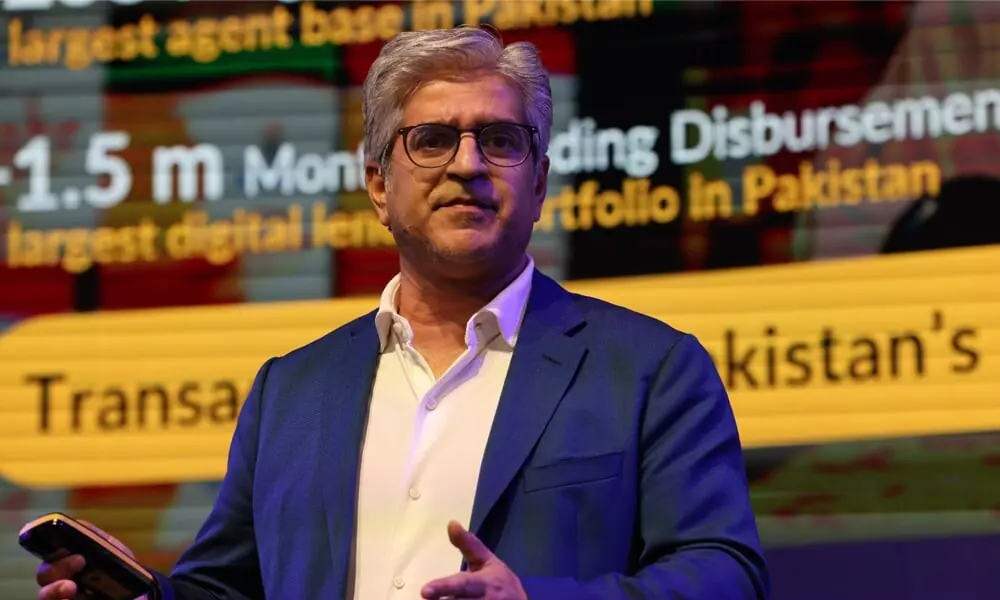
Speaking at Pakistan’s first Pakistan Policy Dialogue, organised by the Policy Research and Advisory Council in collaboration, Ibrahim said the real public demand is for an internet that works consistently and affordably across the country.
Explaining the significance of the auction, Ibrahim described Pakistan as a spectrum-constrained country, noting that it currently has around 274 megahertz of spectrum available nationwide, far below international benchmarks and roughly one-fourth of what countries such as Japan have on a per-capita basis.
He said limited spectrum has become a structural constraint on internet quality, regardless of operator investment.
The upcoming auction, expected to release about 600 megahertz of additional spectrum, represents a “once-in-a-decade opportunity” to strengthen Pakistan’s digital infrastructure, he said. Ibrahim noted that the government’s recently issued information memorandum reflects a more forward-looking approach, shifting away from maximising upfront revenues toward recognising the long-term economic value of improved connectivity.
He said the auction carries different implications for consumers, operators, and the state. For the public, the benefit lies in faster, more reliable, and more affordable internet—primarily through improved 4G services and a gradual, inclusive transition toward 5G. “What matters most to the customer is that the internet works,” he said.
To address the digital divide, he advocated handset financing models that allow consumers to pay for devices in instalments, a practice common in many markets but still limited in Pakistan.
Ibrahim also welcomed the growth of local handset assembly, saying it could help lower prices, meet domestic demand, and eventually support exports.
For the government, he said, the auction presents an opportunity to lay the foundation for a digitally enabled economy. He stressed that connectivity should be viewed as a cross-sector enabler—comparable to electricity—supporting education, healthcare, agriculture, finance, and enterprise.
Linking connectivity to broader inclusion goals, he said, smartphones and broadband can help bridge long-standing gaps in access to education and opportunity. While acknowledging progress over the past decade, he said Pakistan must now use the spectrum auction to build capacity for future demand.
“If done right,” Ibrahim said, “this auction can transform connectivity for people, enable sustainable investment for operators, and unlock long-term economic value for the country.”