
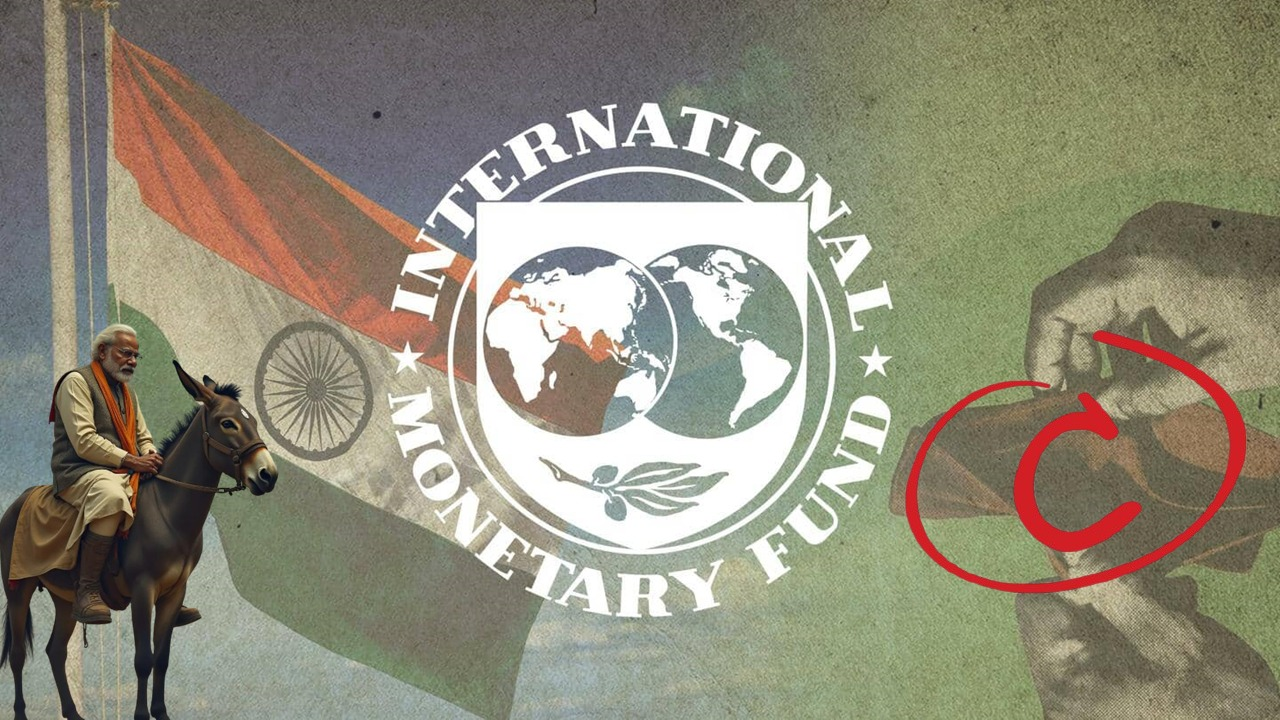
IMF assigns India a ‘C’ grade for GDP and National Accounts Data
AMID METHODOLOGICAL CONCERNS; UPGRADES PLANNED FOR 2026
By Imran Zakir
KARACHI: The International Monetary Fund (IMF) has given India a ‘C’ grade—the second-lowest possible rating—specifically for its GDP and national accounts data, citing persistent methodological weaknesses that could hamper accurate economic surveillance and policy analysis. The assessment was disclosed in the IMF’s 2025 Article IV Data Adequacy Assessment and reflects long-standing statistical challenges in India’s official data frameworks.
Under the IMF’s four-tier grading system—from A (fully adequate) to D (inadequate)—a ‘C’ grade indicates that the data are available and timely but contain significant deficiencies that “somewhat hamper surveillance.” India received this lower rating only for its national accounts, while its overall data quality—including price, fiscal, external sector, and financial statistics—earned a “B” grade, suggesting data are broadly adequate in other areas.
Methodological Weaknesses Identified
IMF officials noted several structural issues that contributed to the ‘C’ assessment:
- Outdated base year: India still uses 2011–12 as the base year for computing GDP and Gross Value Added (GVA), which may not capture major shifts in the economy over more than a decade.
- Deflation methodology concerns: The country relies heavily on the Wholesale Price Index (WPI) for deflating nominal metrics instead of a more accurate Producer Price Index (PPI).
- Single deflation approach: Lack of double deflation (separately adjusting inputs and outputs) can distort real GDP measurements.
- Production vs expenditure gaps: There are notable discrepancies between production-side and expenditure-side GDP estimates, indicating potential under coverage, especially of household consumption and informal economic activity.
- Seasonal adjustment and data granularity: The absence of seasonally adjusted quarterly accounts and limited disaggregation reduces the usefulness of the data for short-term trend analysis and high-frequency monitoring.
These methodological weaknesses, the IMF noted, may weaken confidence in GDP numbers’ precision and limit their utility for in-depth policy evaluation, especially when detailed comparisons with other economies are required.
Context & Government Response
Despite the ‘C’ grade for national accounts, the IMF acknowledged that India’s economy continues to grow strongly. In its broader economic appraisal, it projected GDP expansion of around 6.5% for 2025–26 and commended India’s macroeconomic stability and inflation management.
India’s Finance Ministry and statistical authorities have responded by underscoring that the IMF’s judgement relates to methodological standards rather than the credibility of growth figures themselves. Officials reiterated that the forthcoming rebased GDP series (2022–23 base year) due in February 2026 is expected to address several of the concerns raised, including more contemporary weight structures and broader sector coverage.
Why This Matters?
The IMF’s grading system is used globally to assess the reliability and comparability of economic statistics. A ‘C’ grade for national accounts signals that while data are present and sufficiently frequent, there are underlying statistical deficiencies that can make it harder for international organizations, investors, and policymakers to interpret short-term economic developments with full confidence.
By contrast, the overall median data grade of ‘B’ for India aligns it with several other emerging economies that face similar challenges in statistical infrastructure—even as they report strong gross domestic product growth.
Towards Statistical Reforms
The Indian government has stated that the updated national accounts and price indices will align better with current economic realities and international best practices. This includes more frequent household and enterprise surveys, enhanced producer price data, and improved seasonal adjustment techniques—all aimed at enhancing India’s statistical credibility on the global stage once the new series is launched in 2026.