

Pakistan, Indonesia eye expanded rice trade and agricultural cooperation
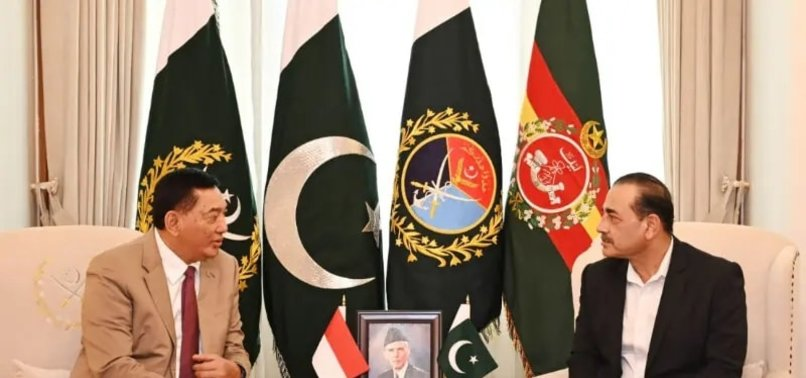
Pakistan and Indonesia have agreed to deepen bilateral cooperation in trade, investment, and key sectors, with a particular focus on agriculture, food security, and broader economic engagement, as both sides seek to translate strong diplomatic relations into tangible commercial outcomes.
The understanding emerged during a detailed meeting between Federal Minister for Commerce Jam Kamal Khan and the Ambassador of Indonesia to Pakistan, Chandra Warsenanto Sukotjo, held on the directions of Prime Minister Shehbaz Sharif.
The talks reviewed existing trade arrangements and explored new avenues for collaboration, according to a press release issued.
Briefing the ambassador, the commerce minister outlined Pakistan’s evolving trade strategy, highlighting rice exports as a top priority.
He noted that Pakistan remains one of the world’s leading rice exporters, offering internationally recognized quality, while acknowledging intensified global price competition following recent interventions by major producers.
He said the government is working on financial and commercial measures to improve price competitiveness without compromising quality, to protect and expand Pakistan’s market share.
The minister emphasized Pakistan’s proposal to re-engage select partner countries, including Indonesia, through open-market and government-to-government (G2G) frameworks.
He stressed that reliability, quality, and competitive pricing remain central to importer confidence, and called for reviving the Pakistan–Indonesia rice cooperation framework to unlock mutually beneficial opportunities.
Pakistan has already shared a revised draft with Indonesia and expressed hope for its early finalization to institutionalize long-term cooperation in the staple commodity.
Concerns were also raised over agricultural market access, particularly for kinnow (mandarin) exports.
Pakistan is awaiting the issuance of Indonesian import quotas to ensure smooth seasonal shipments, with delays posing risks to growers and exporters.
The minister also flagged the recent increase in food and agricultural testing requirements for Pakistani kinnow, noting that the Department of Plant Protection is engaged with Indonesian authorities to resolve the issue.
Beyond agriculture, discussions covered cooperation in energy, biodiesel, minerals, and infrastructure.
Pakistan invited Indonesian investors to consider the country as a regional hub for palm oil storage, processing, and onward exports to Africa, the Middle East, and Central Asia, citing improved port, logistics, and connectivity infrastructure.
Opportunities under Special Economic Zones and potential collaboration in CPEC-linked projects were also highlighted.
The Indonesian ambassador welcomed Pakistan’s proposals and acknowledged the positive momentum generated by recent high-level exchanges.
He assured that issues related to rice cooperation, agricultural access, and trade facilitation would be conveyed to Jakarta, noting Indonesia’s interest in food security, diversified sourcing, and competitive pricing.
Both sides agreed to intensify institutional engagement through early meetings of the Joint Trade and Development Committee, trade forums, and virtual consultations, reaffirming their commitment to advancing economic cooperation through structured dialogue and private-sector participation.