
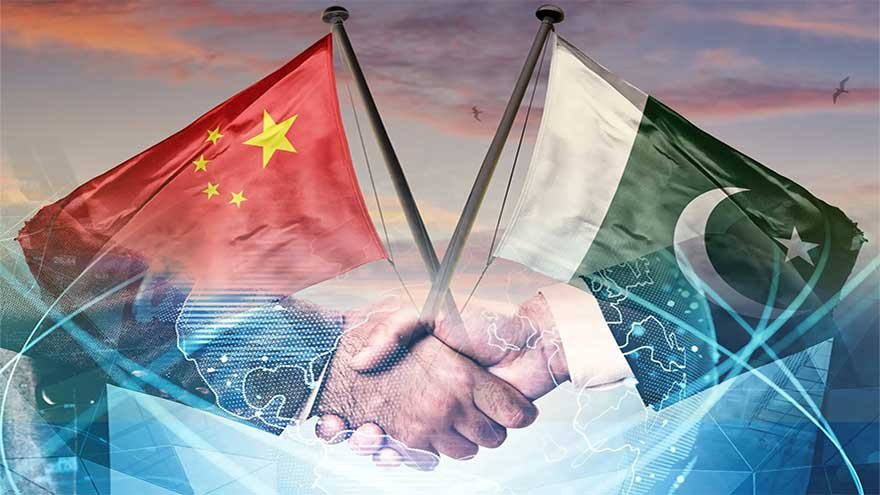
Pakistan, China join hands for international Skills Passport
Pakistan and China have taken a significant step to enhance vocational and technical education cooperation.
The move came with the signing of a Memorandum of Understanding (MoU) between the National Vocational and Technical Training Commission (NAVTTC) and the China Global Professional and Technical Certification Center (CGPTC).
The agreement was formalized last week during the China-Pakistan International TVET-Industrial Education Cooperation and Exchange Seminar, marked a milestone in bilateral collaboration on skills development.
Vincent Que, CEO of CGPTC, and Ms. Gulmina Bilal Ahmad, Chairperson of NAVTTC, signed the MoU on behalf of their respective organizations, reported by APP.
The partnership will focus on implementing China’s advanced vocational standards and certification systems across multiple technical fields in Pakistan.
This initiative aims to establish an international “Skills Passport” for Pakistani youth, enhance the country’s role as a global hub for skilled talent, and supply high-quality human resources for strategic projects such as the China-Pakistan Economic Corridor (CPEC).
Ms. Gulmina Bilal Ahmad highlighted the achievements of CGPTC in promoting the international recognition of vocational skills and the development of the “Skills Passport” system.
In recognition of this shared vision, CGPTC invited her to serve as the First Rotating Chairperson of the International Vocational Certification and Standards Coordinating Council, further strengthening Pakistan’s role in shaping global skills standards.
Both parties also agreed to host the council’s inaugural meeting in April 2026, inviting heads of vocational education institutions from multiple countries to collaborate on establishing concrete pathways for international vocational cooperation.
The formal signing of this MoU represents a significant step forward in the global expansion of CGPTC’s vocational certification system, laying a solid foundation for attracting more countries to participate and promoting the mutual recognition of standards in the future.
This landmark agreement not only strengthens China-Pakistan educational collaboration but also emphasizes Pakistan’s commitment to developing a highly skilled workforce capable of supporting national and regional economic initiatives.
The partnership is expected to open new opportunities for Pakistani youth, enhance the quality of technical education, and advance Pakistan’s position in the international vocational and technical education landscape.